Targeted work
Document the specific area and the detail connected to it.
Loading interactive preview… / Cargando vista interactiva…
Choose the condition you’re noticing. The roof section will show where an inspection starts.
Map the roof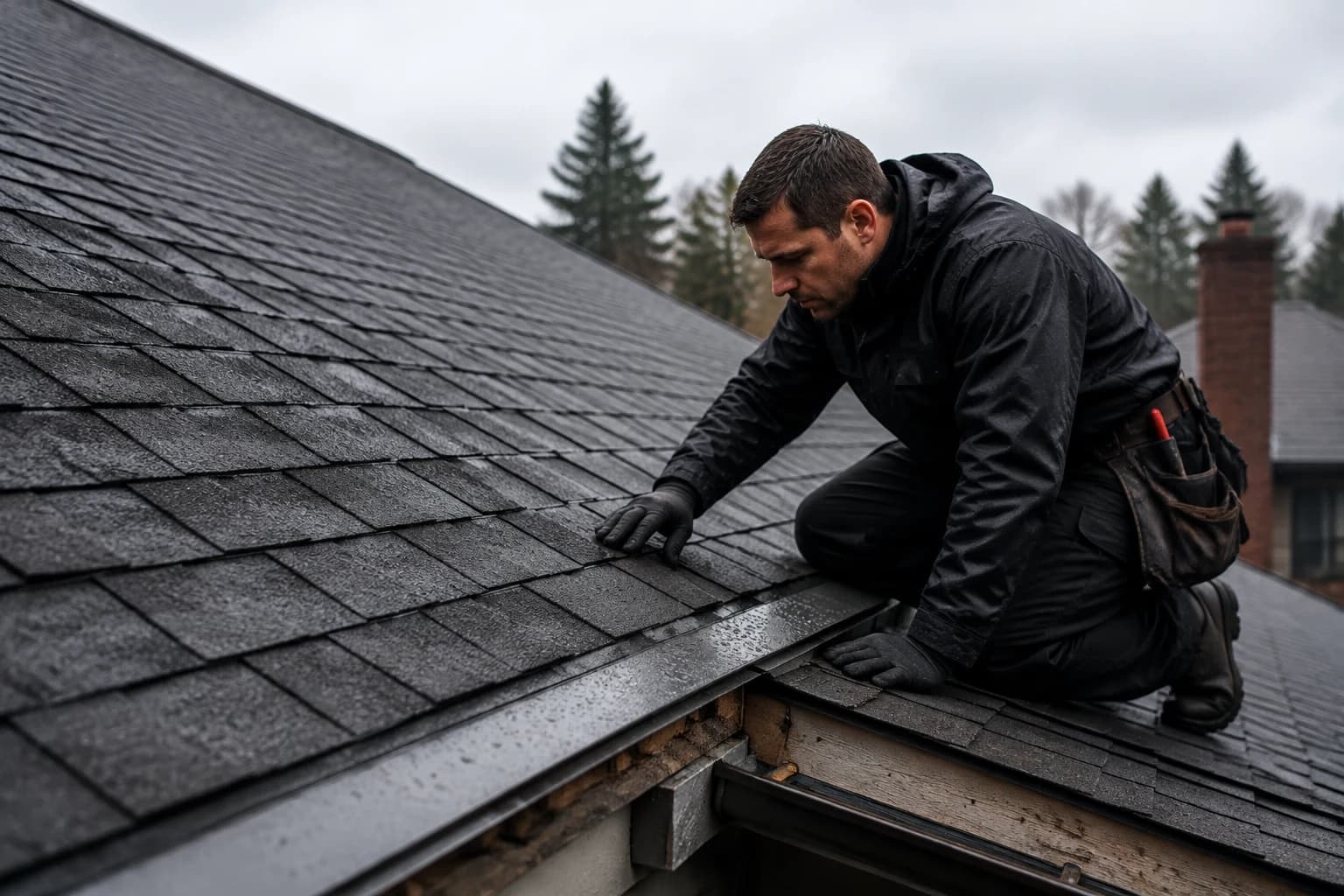
Trace the path from surface, to flashing, to the space below.
Select a point to see what belongs in the inspection notes.
Use what you see to organize the next conversation.
Document the specific area and the detail connected to it.
Compare scope, underlayment, drainage, and connected details.
Consider broader, repeating factors across the roof assembly.
Understand the surface, then record the details around it.
| Material | Look at | Plan around | Detail to record |
|---|---|---|---|
| Asphalt shingle | Granules, curling, cracking, fasteners, and exposed transitions. | Slope, valleys, penetrations, shade, and drainage paths. | Shingle form, visible layers, installation context, ventilation. |
| Standing-seam metal | Panel seams, fasteners, coatings, scratches, and sealant. | Thermal movement, transitions, snow path, and roof geometry. | Panel profile, material, finish, attachment, and edge method. |
| Low-slope membrane | Ponding marks, seams, blisters, punctures, and edge conditions. | Drainage, rooftop equipment, penetrations, and foot traffic. | Membrane type, visible seams, drainage points, and access. |
Move vehicles and loose outdoor items away from the house.
Record stains, drips, daylight, odors, or unusual sound.
Bring past repair notes and any known material information.